Snapshot USA
Seeing the forest AND the trees
Why is this needed?
Unlike birds, which have long had multiple large-scale monitoring programs, there was no nation-wide monitoring of mammal populations … until Snapshot USA. To fill that glaring gap, Roland Kays, Bill McShea and Mike Cove of the Smithsonian Conservation Institution and partner organizations started Snapshot USA in 2019.
Monitoring is typically time-consuming, expensive and labor intensive, but by making Snapshot USA a collaborative project combining the efforts of many, and adding machine learning, it became possible to collect rigorous data over huge areas, analyze it and distribute it. That’s big monitoring.
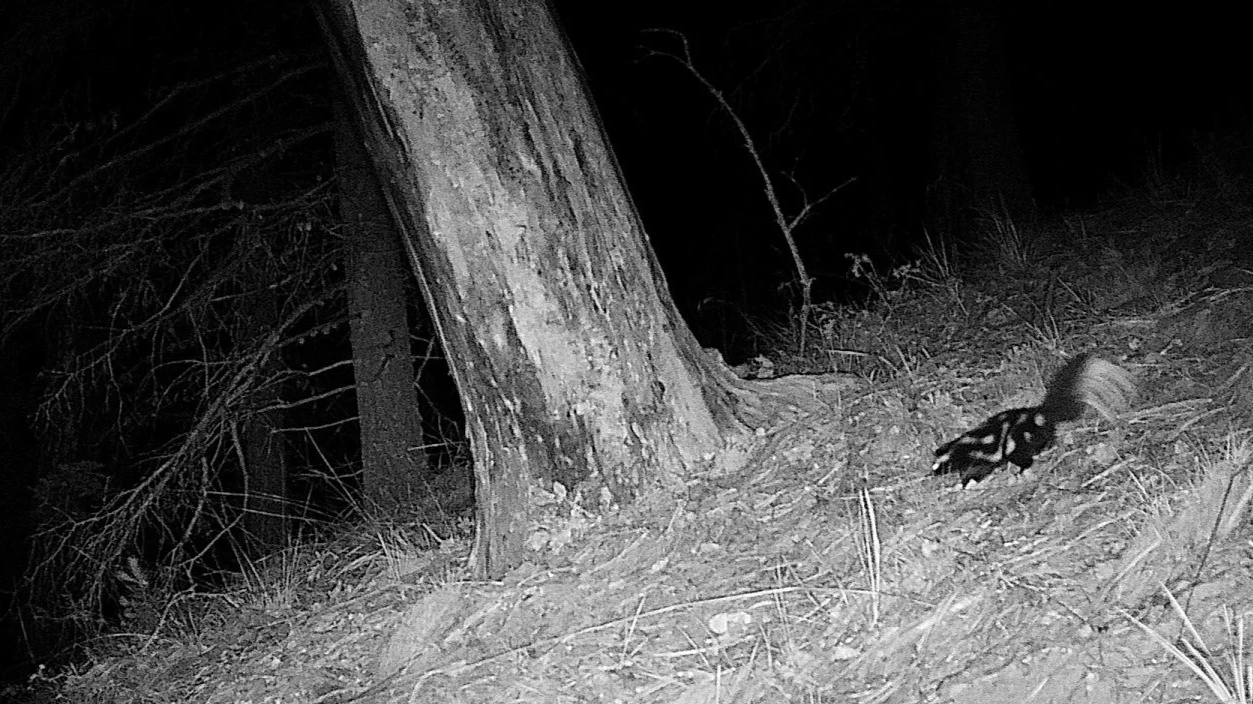
What’s up with skunks in New Mexico?
How about beautiful bobcats? Wily coyotes? Behemoth bears? Are the numbers of these increasing or decreasing? And are new species moving into the state? Are established species expanding their range or losing it to development, fire, drought or other changes?
How can we answer these questions and others that tell us what is going on with our wildlife? We monitor, that is, we perform repeated surveys over time, of the wildlife populations in their habitats.
And that’s where Snapshot USA, from the Smithsonian Institute, and Seventh Generation Institute come in, collaborating with others to do “big monitoring” that sees the big picture, the forest, and the smaller local picture, the trees.
Who participates?
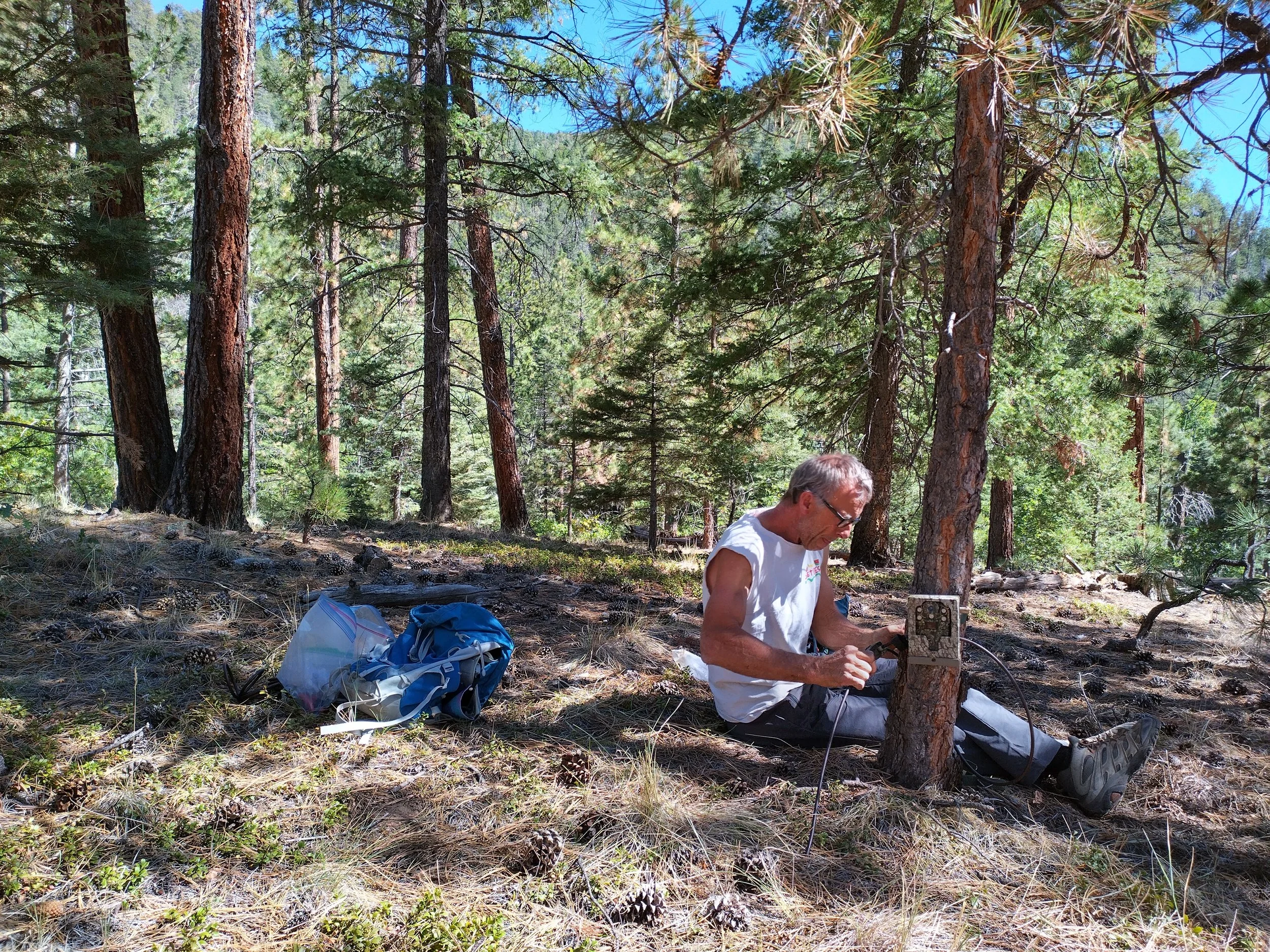
The long-term project relies on professionals in organizations, agencies and universities to monitor in their local area. Each group volunteers their time and equipment to collect data via camera traps.
Where does Snapshot USA happen?
Some sites in the US have been continuously monitored since 2019, while others have been moved and new ones have been added, with new programs even expanding to fifteen countries outside the US.
How does it work? About camera traps, Wildlife Insights and species identification
Also called game cameras, camera traps are not actual traps. They capture only images. Many people have a game camera in their backyard to see visiting wildlife or who is eating the roses. The Snapshot USA surveys require at least 8 cameras and run for at least 400 total nights of camera “trapping.” The cameras run 24 hours per day, totally silent, and are activated by motion and heat. From tiny shrews to fat-bear-week-sized behemoths, any animal that walks by will trigger the camera to capture images. No baits or scents are used so animal behavior is not affected.
When the surveys are complete, the cameras are retrieved, images are uploaded to Wildlife Insights for preliminary identification. Wildlife Insights is an online platform that uses machine learning models and other tools to manage, analyze and share camera trap data with everyone.
Wildlife Insights is extremely valuable; the tool saves hundreds of hours of review by filtering out repetitive images, blanks, and those that show only wind-blown vegetation. But all species are verified by human eyes. To date, Snapshot USA has collected millions of images that are connected to geographic locations. The images are analyzed in various ways and the results are published in scientific journals as well as articles for the general public. You can find some of these both types of publications here.
And can I see the images from my local area?
All of the images are available for the public to view and download at Wildlife Insights.
What’s the role of Seventh Generation Institute?
Seventh Generation Institute is proud to announce our contribution to Snapshot USA for the 2026 fall survey season. We were privileged to see many new and spectacular places while seeking out camera sites.
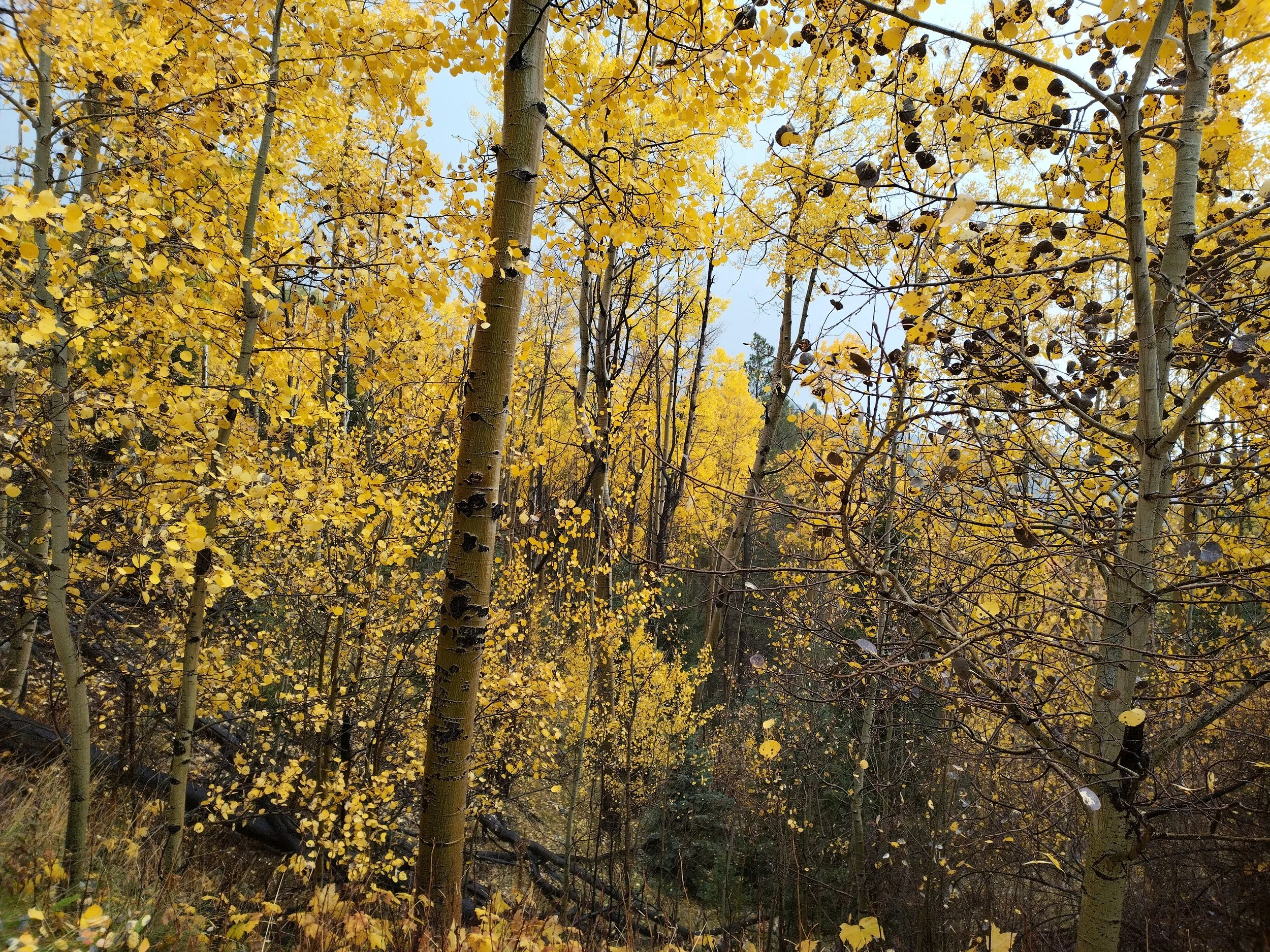
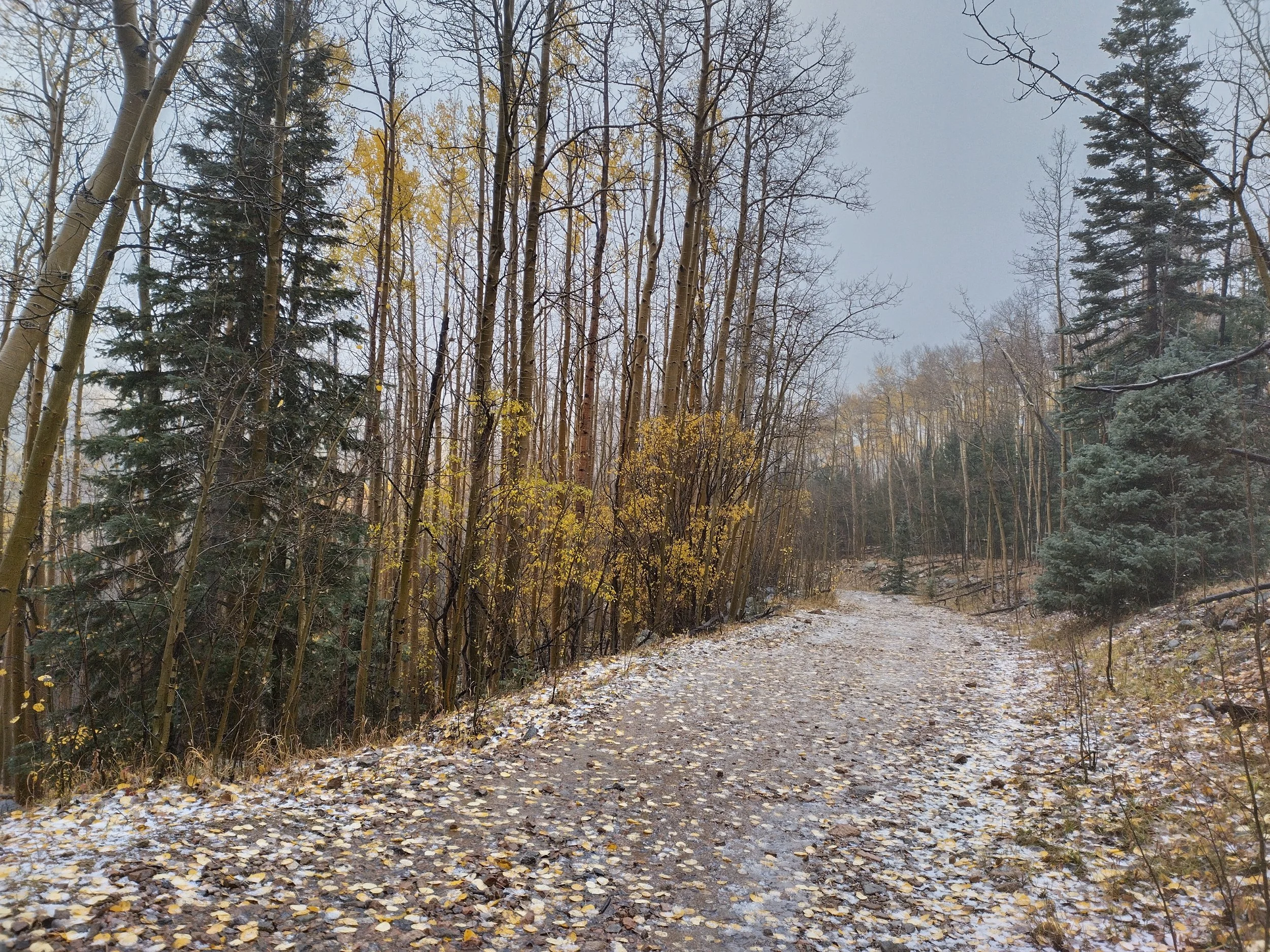
Our target survey area was wilder parts of the southern Rockies. The challenges were multiple and considerable.
We avoided trails, campgrounds and other areas heavily used by people whose presence would disturb wildlife. (These areas could present interesting looks into how wildlife use them compared to less disturbed areas so perhaps we will do comparison studies in the future.) Going off trail meant finding areas that were not so choked with brush and trees that we could not get images for more than a few feet! In the often overgrown forests of the southern Rockies, this eliminated many sites.
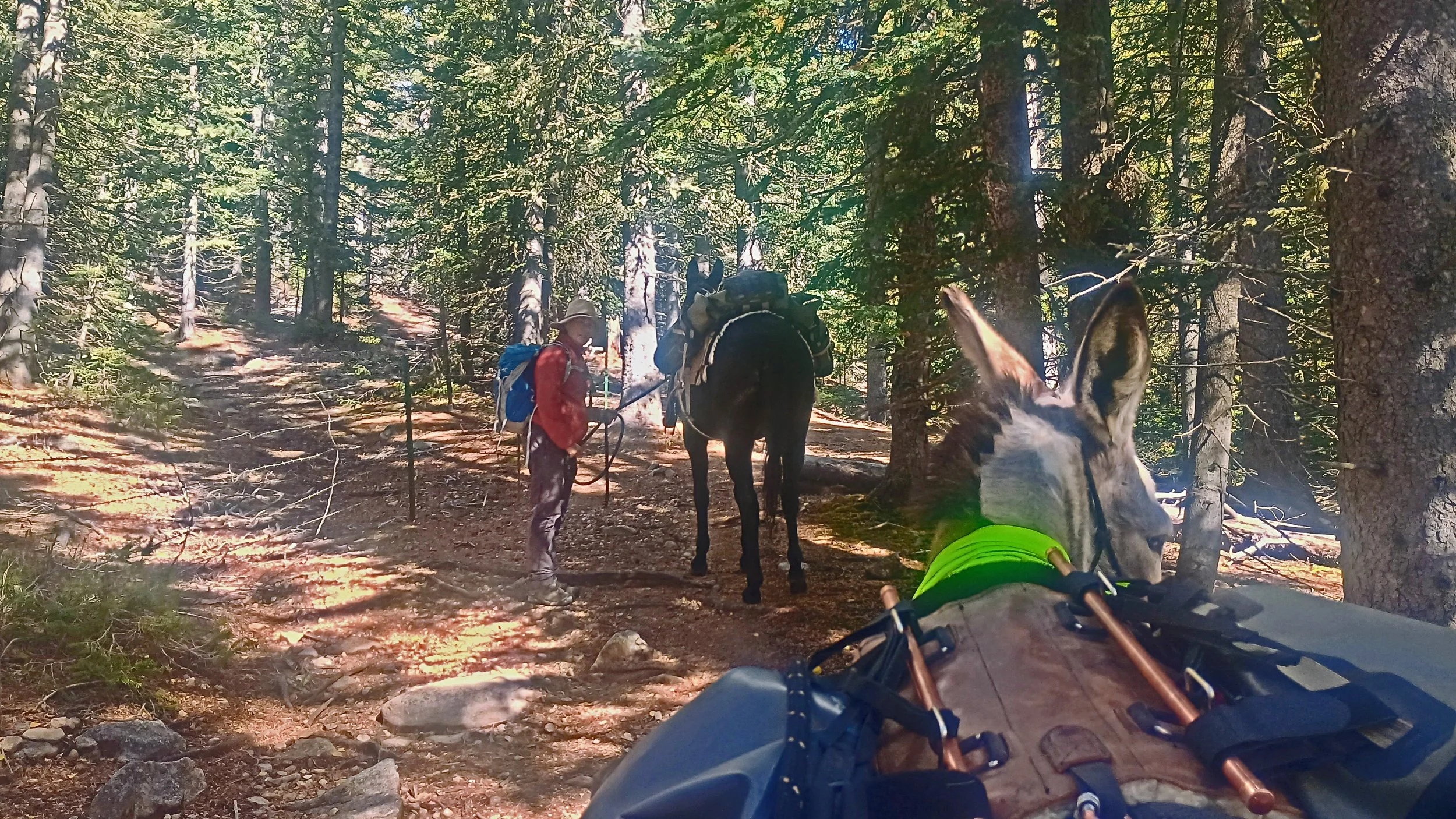
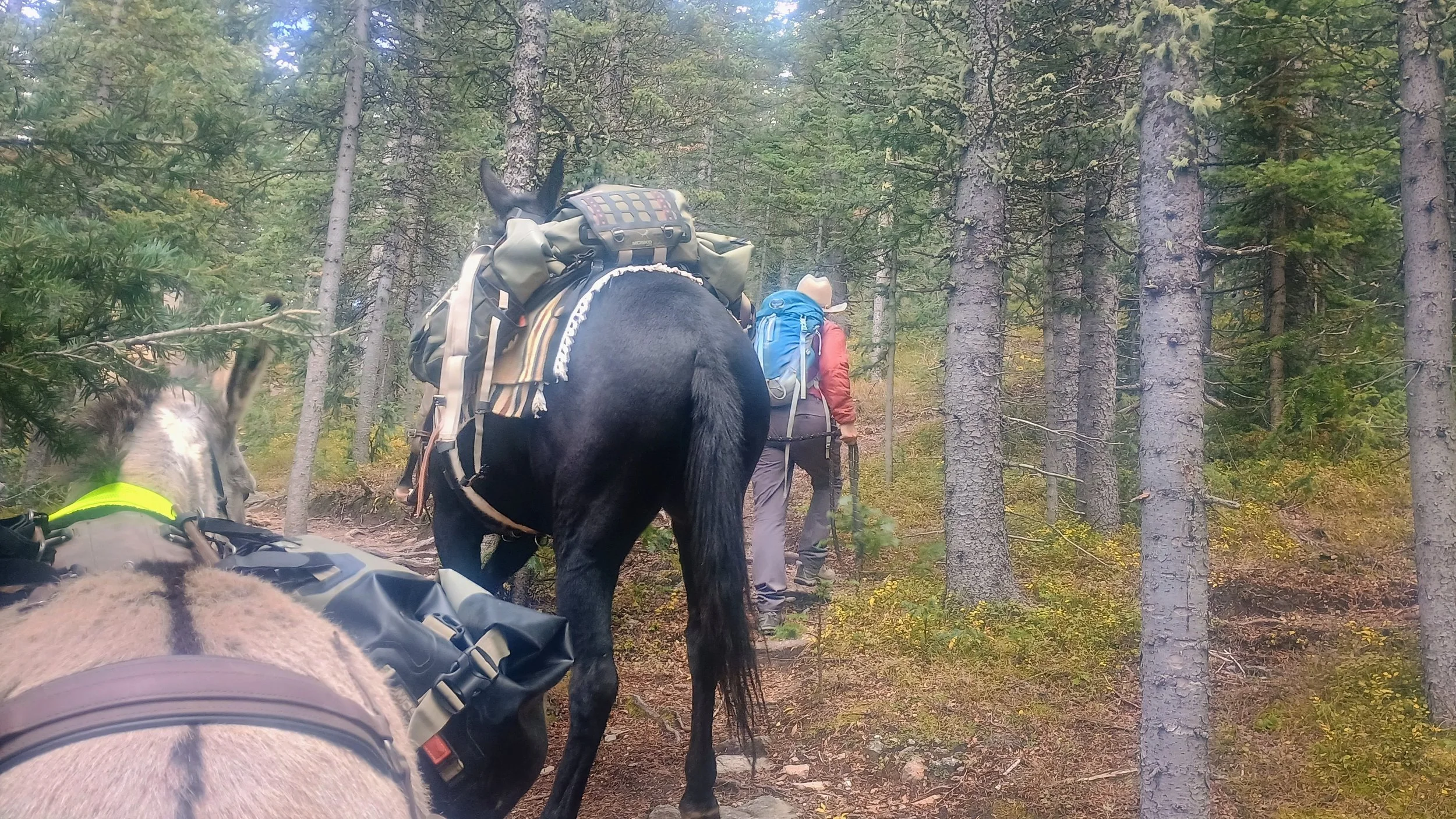
Equally, carrying heavy cameras, locks and security boxes, along with camping gear and all travel was extra difficult this year due to the record-breaking drought in the Southwest. Initially, our pack stock could not help us carry in the heavy gear, as there was not enough water or grass for them. On foot, trips had to be shorter and be planned around the prospect of dried up streams and springs and how much water we could carry.
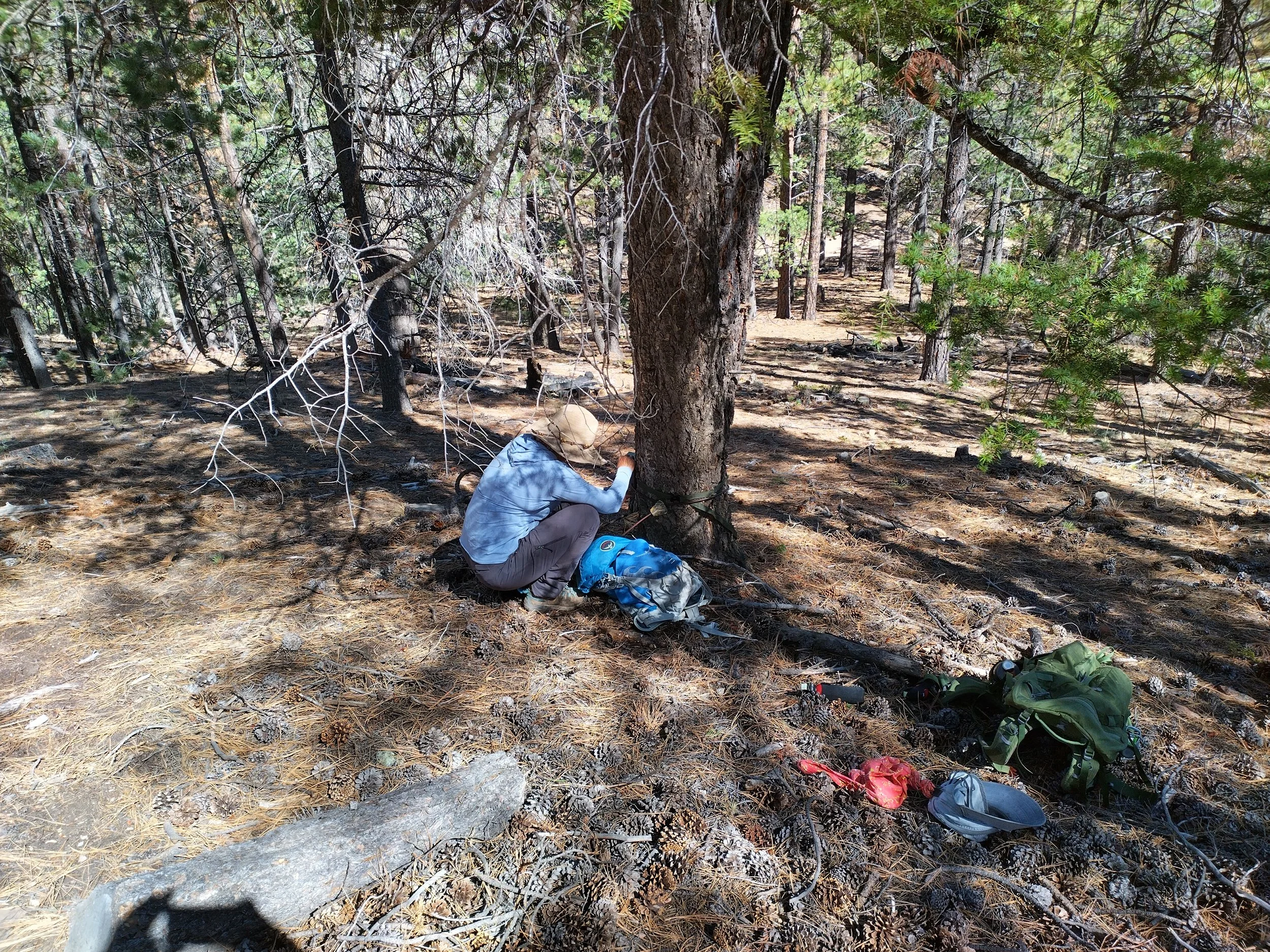
Following the standardized protocol, we placed sixteen cameras in the southern Rockies attaching each to a tree where it could capture images of wildlife passing by, finding water, finding food and other behaviors.
And the rain finally came. And when it arrived in massive amounts, the situation changed in a heartbeat to run-off and flooding, followed by the slippery mud that the Southwest is famous for. We returned and removed all traces of the cameras after approximately 40 days and nights each. (Sorry folks, exact locations cannot be revealed due to the risk of camera vandalism or theft.) And at this point, our hoofed helpers helped us retrieve all the heavy gear through the boot-sucking mud.
The project was indisputably an “adventure in conservation.” We hope to be back bigger and better next year.
What did the game cameras see?
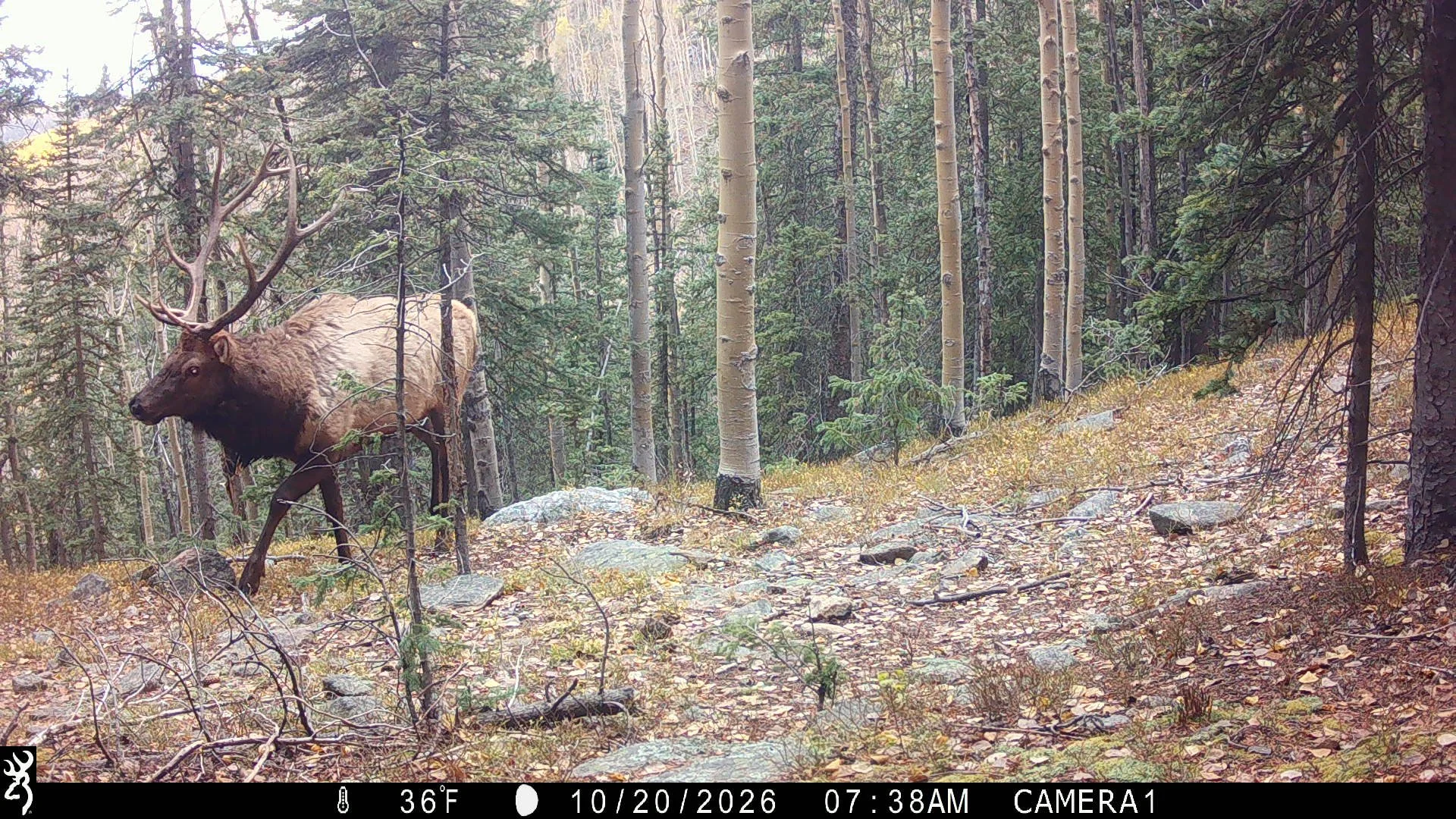
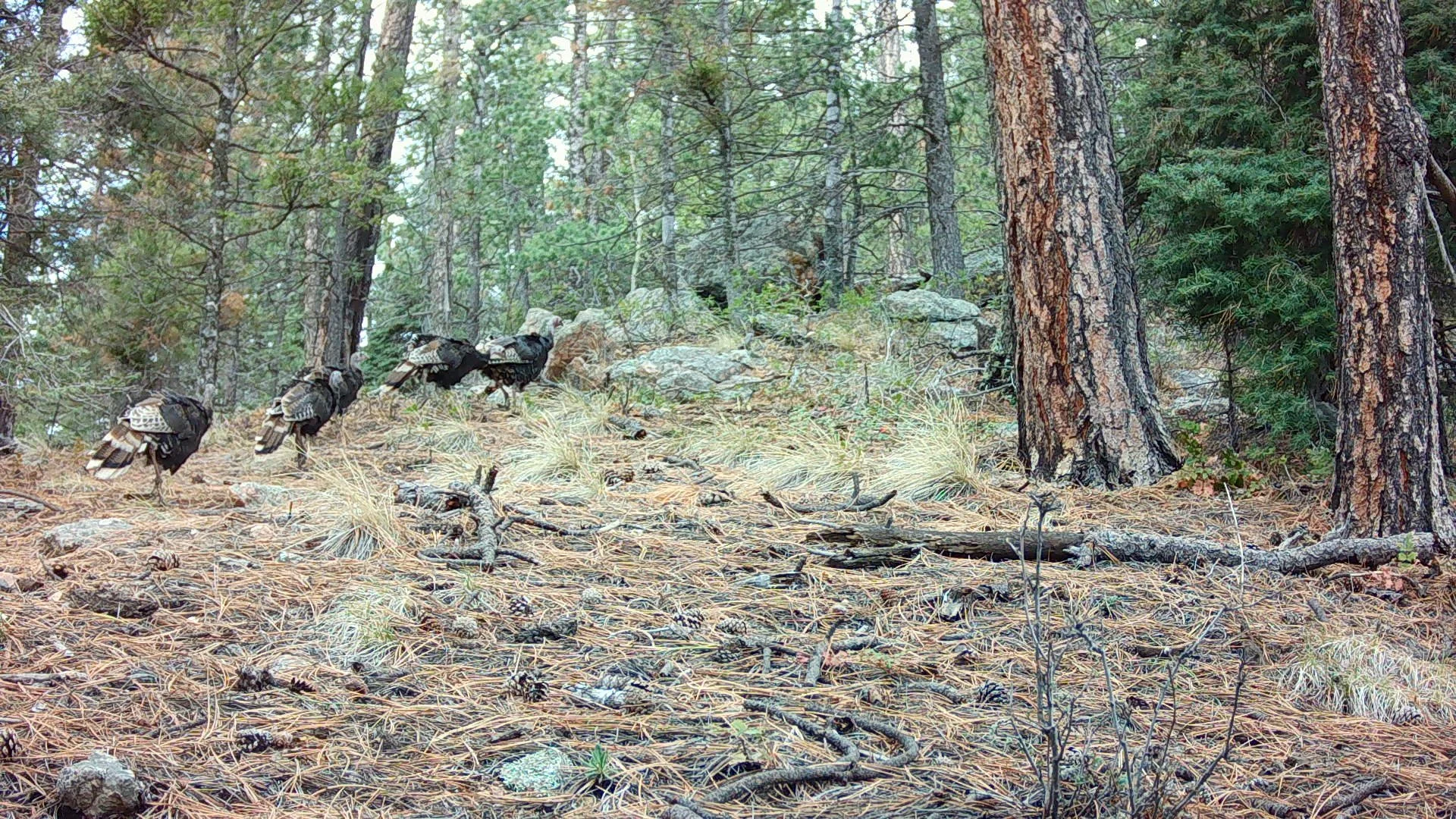
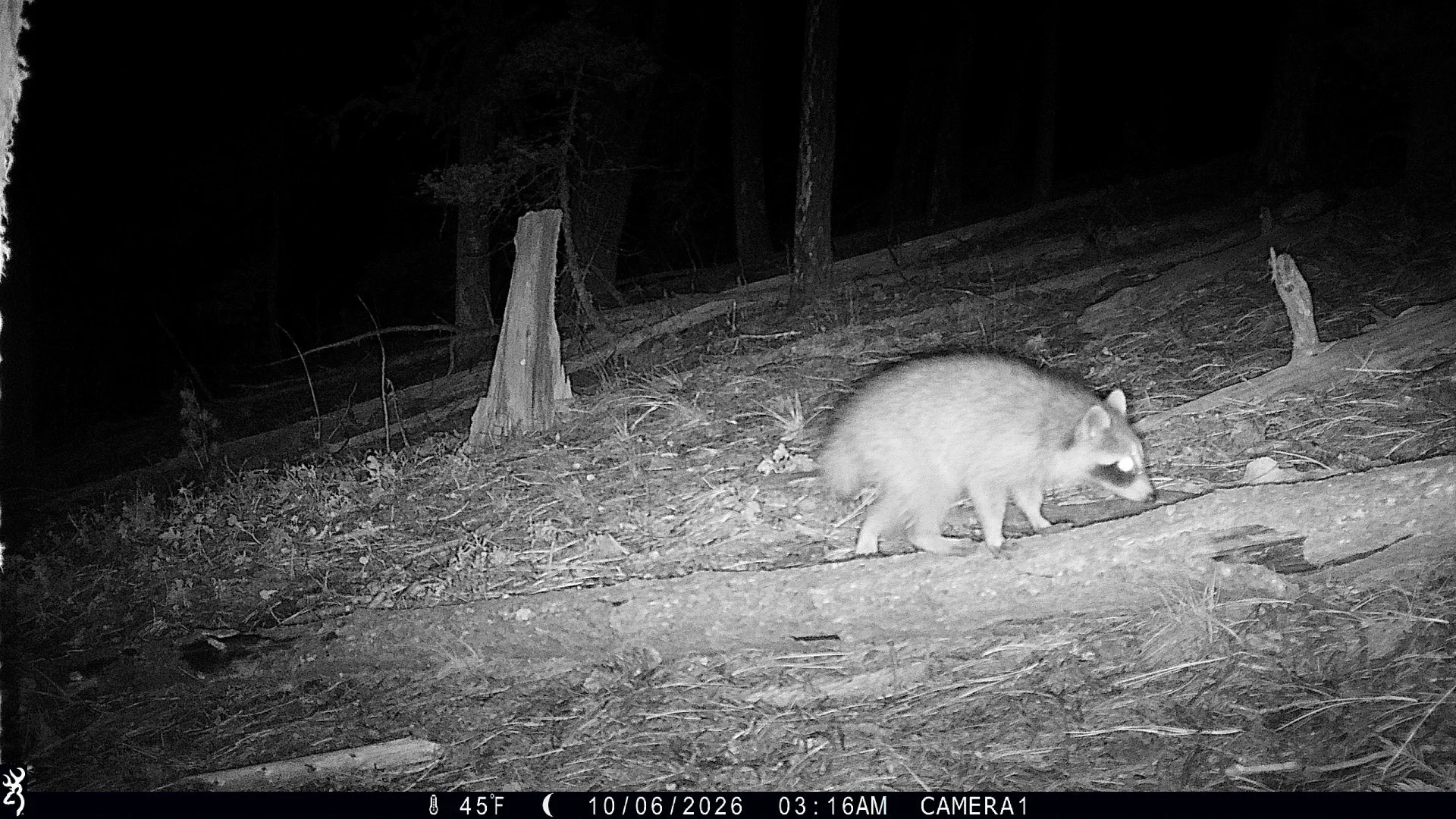
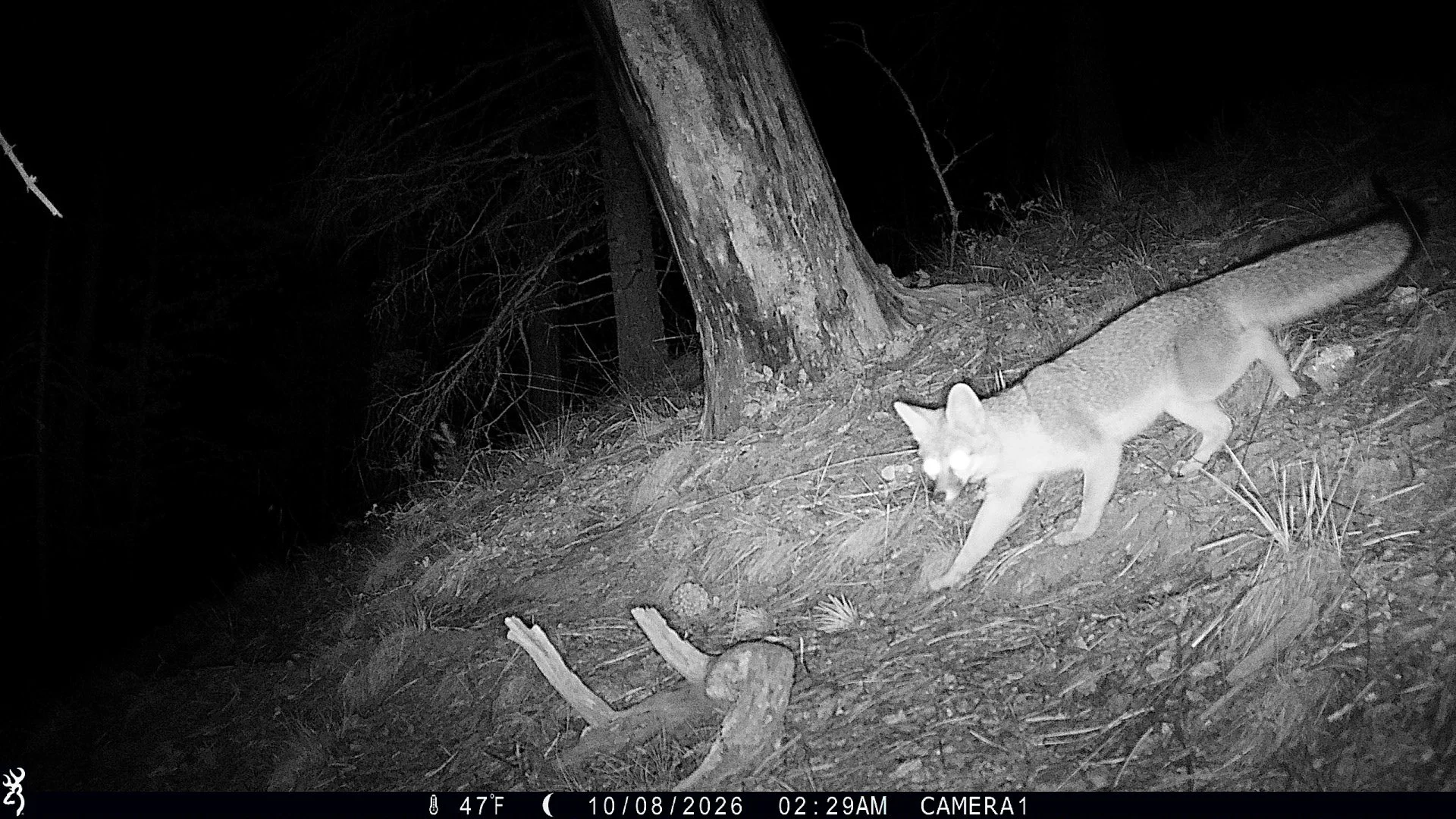
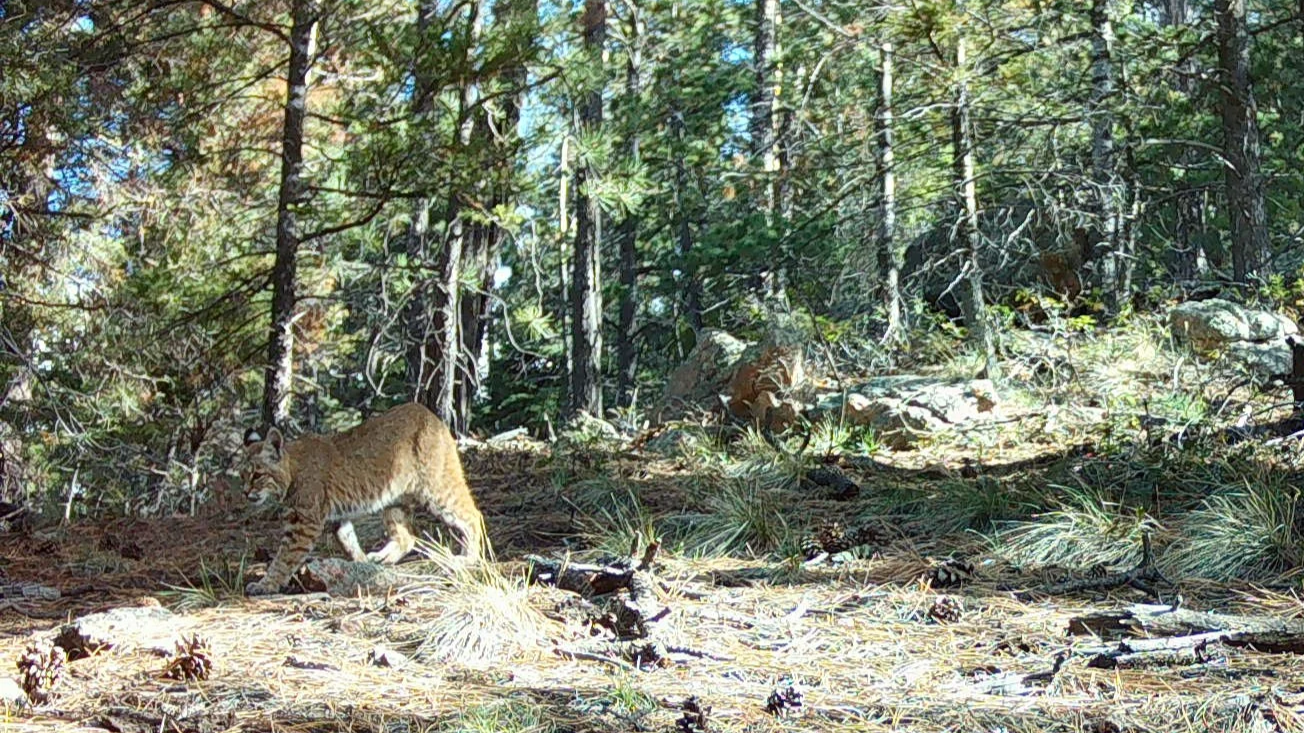
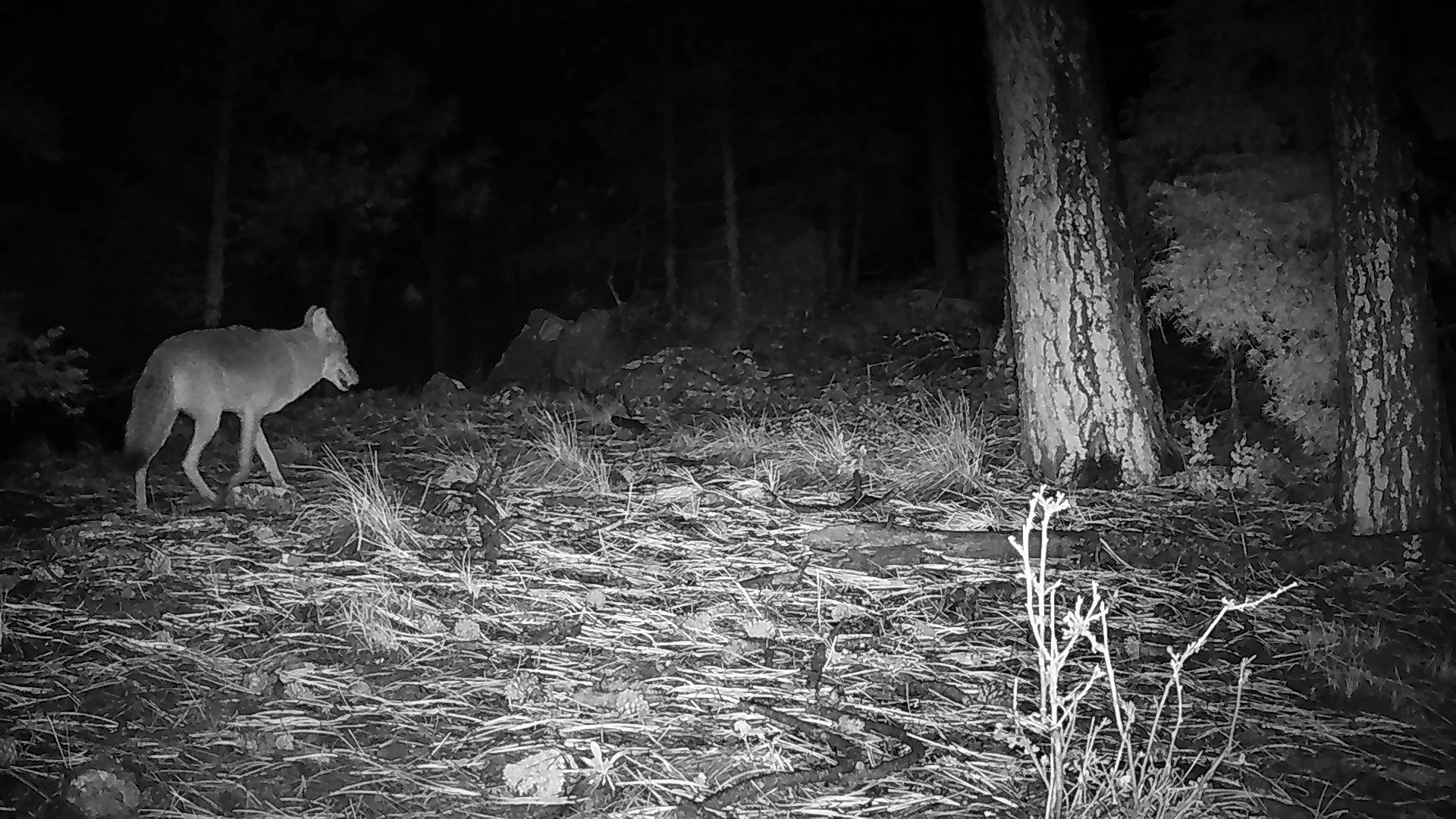
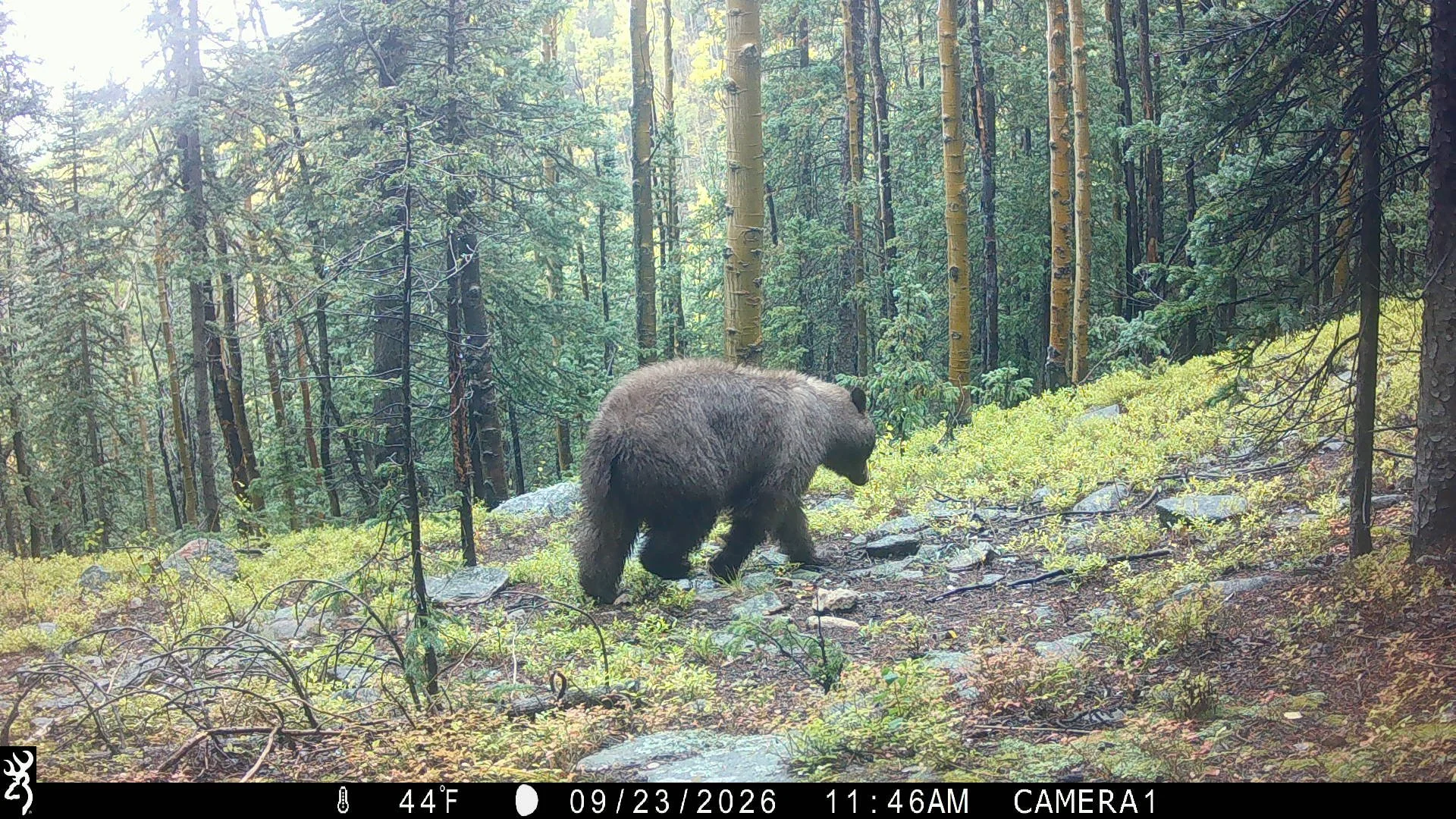
Skunks, bobcats and foxes. Also coyotes, rabbits, deer, elk, bears, raccoons, squirrels, mice and of course some non-mammals including turkeys.
Some cameras captured only a few images. Others captured thousands. We have shared some of the best images with you on this page.
Thank you!
Thank you to Browning Trail Cameras which supported project collaborators with high quality cameras.
Thank you to collaborators across the US and around the world.
And to the Smithsonian Conservation Institute, especially Snapshot USA Coordinator, Brigit Rooney.
And to our intrepid hoofed packers, Pearl and Poptart (who by the way accept donations of hay!)